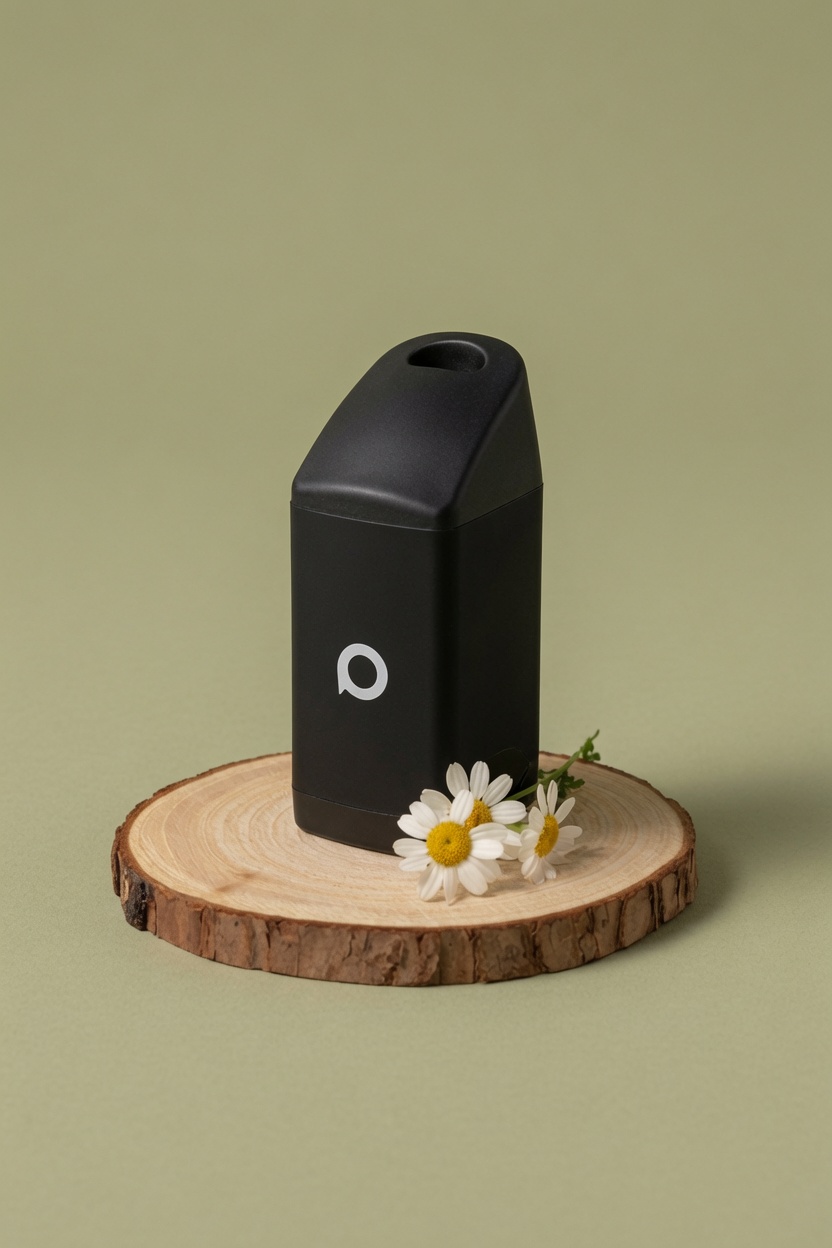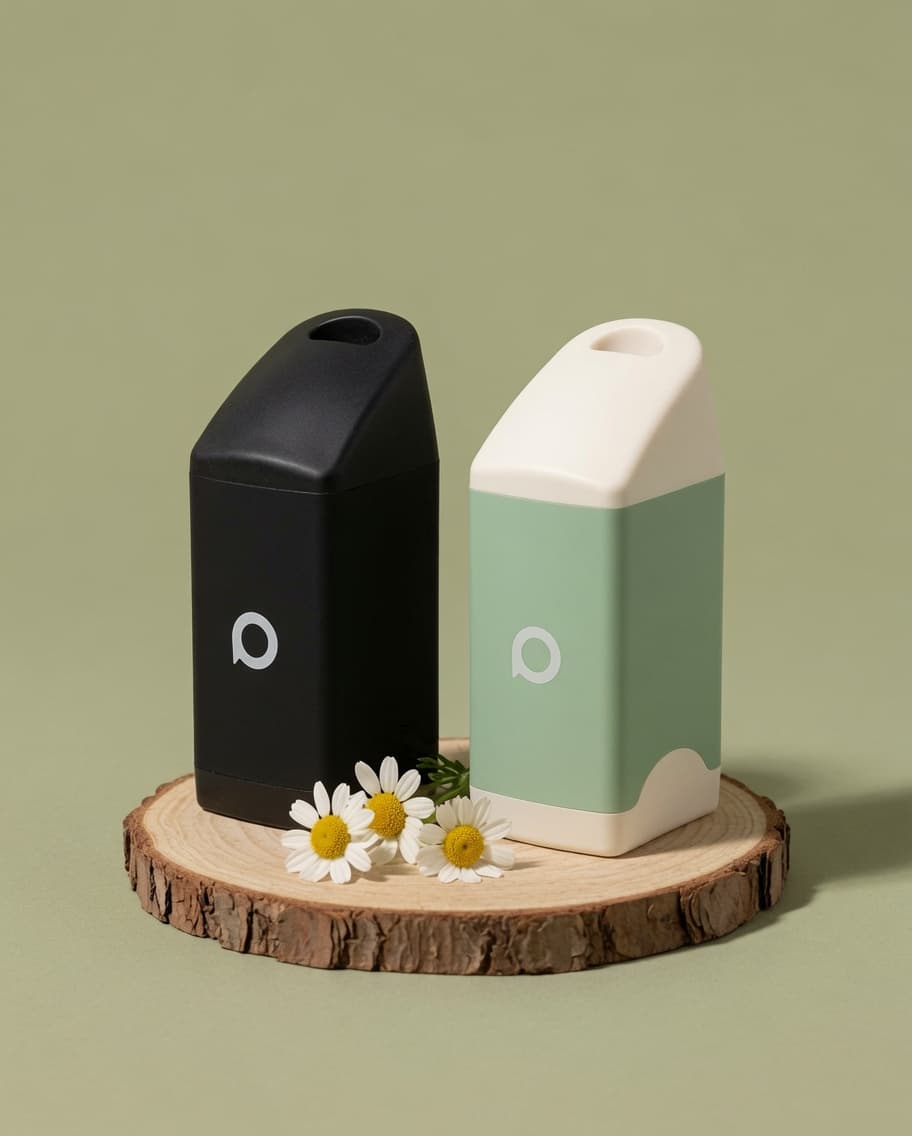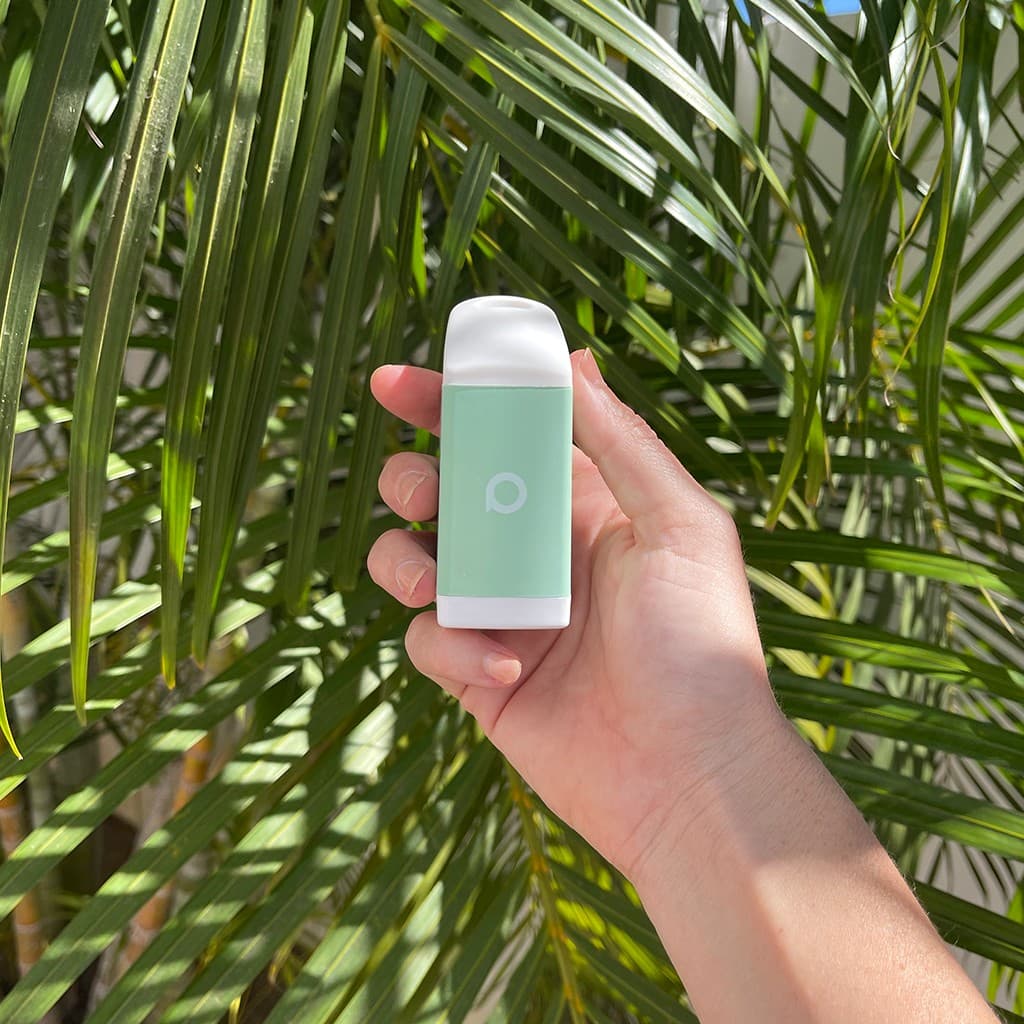
A smoke filter for weed is a personal, exhale-through device you breathe out through after a hit, capturing part of the visible smoke, particles, and odor before they reach the room. Cannabis exhale is resin-heavy, so capacity, odor capture, and airflow matter more than they do with lighter output.
What a weed smoke filter actually does
You exhale through the device, and its internal media captures part of the smoke, particles, and odor carried in that breath. It works on the air you deliberately push through it, and nothing else.
That limit is the honest starting point. An exhale-through filter only treats what you exhale through it. It does not capture sidestream smoke drifting off a lit joint, bowl, or blunt, and it does not make smoking or vaping safe. It is not a health device. What it does well is stop the largest, most controllable source of odor in a room: the cloud you breathe out.
If you are also dealing with smell that has already settled into fabric and surfaces, that is a different job. See how to get rid of weed smell for room-by-room cleanup, and treat the filter as the upstream step that keeps less odor landing in the first place.
What to look for in a filter used with cannabis
Cannabis smoke carries sticky resin and strong terpene odor, which is exactly why some filters that feel fine for a light vape hit clog fast on flower. Judge a filter on four things.
Capacity
Ask how many exhales a cartridge is rated for, and whether that number reflects real use. A higher rated capacity means fewer replacements and a lower cost per session. Resin builds up over time, so capacity and airflow are linked: a spent cartridge is one that has either saturated or gotten hard to breathe through.
Odor capture
Terpenes are what people smell down the hall. Look for media built to adsorb odor compounds, not just trap large particles, and be skeptical of any product that leans on fragrance to cover the gap. Masking is not filtration.
Airflow resistance
You should be able to exhale a full, resin-heavy breath without fighting the device. Tight airflow is the most common reason people abandon a filter, and it is the clearest signal a cartridge is done.
Replaceable cartridges
A replaceable-cartridge design keeps the outer device in use and swaps only the spent media. Compare device price, refill price, and how easy refills are to get. Disposable filters cost less upfront and more over time.
For a fuller rundown of buying criteria across brands and formats, read the best personal smoke filter guide. If you are new to the category entirely, what is a sploof covers the basics and where DIY versions fall short.
How Zero-5 handles a resin-heavy exhale
PHREND is a reusable personal smoke filter built around Zero-5, a five-stage microfiltration cartridge you exhale through. The stages work in sequence to capture particles and reduce odor, and PHREND removes 99.75% of harmful particulates in secondhand smoke. The output is virtually invisible and low-odor, not clean air, and not something to breathe back in.
Each cartridge is rated for up to 500 exhales, with the real number varying by how large your exhales are and how much resin they carry. When airflow tightens or odor starts returning, that is your cue to swap it, regardless of the count. The cartridge itself is a biodegradable, plant-based polymer that decomposes in a landfill.
Cost per exhale
The number that matters is cost per exhale, not sticker price. A single PHREND cartridge rated for up to 500 exhales spreads its cost across every session. The Best PHREND Bundle pairs the device with two refills for 1,500+ exhales, which lowers the per-exhale cost further and means you are not reordering after a couple of weeks. Weigh that against disposable filters you replace whole each time.
The bottom line
For cannabis, prioritize capacity, real odor capture, honest airflow, and cartridges you can actually get. Filter the exhale to stop odor at the source, then handle any settled smell separately. Shop PHREND.