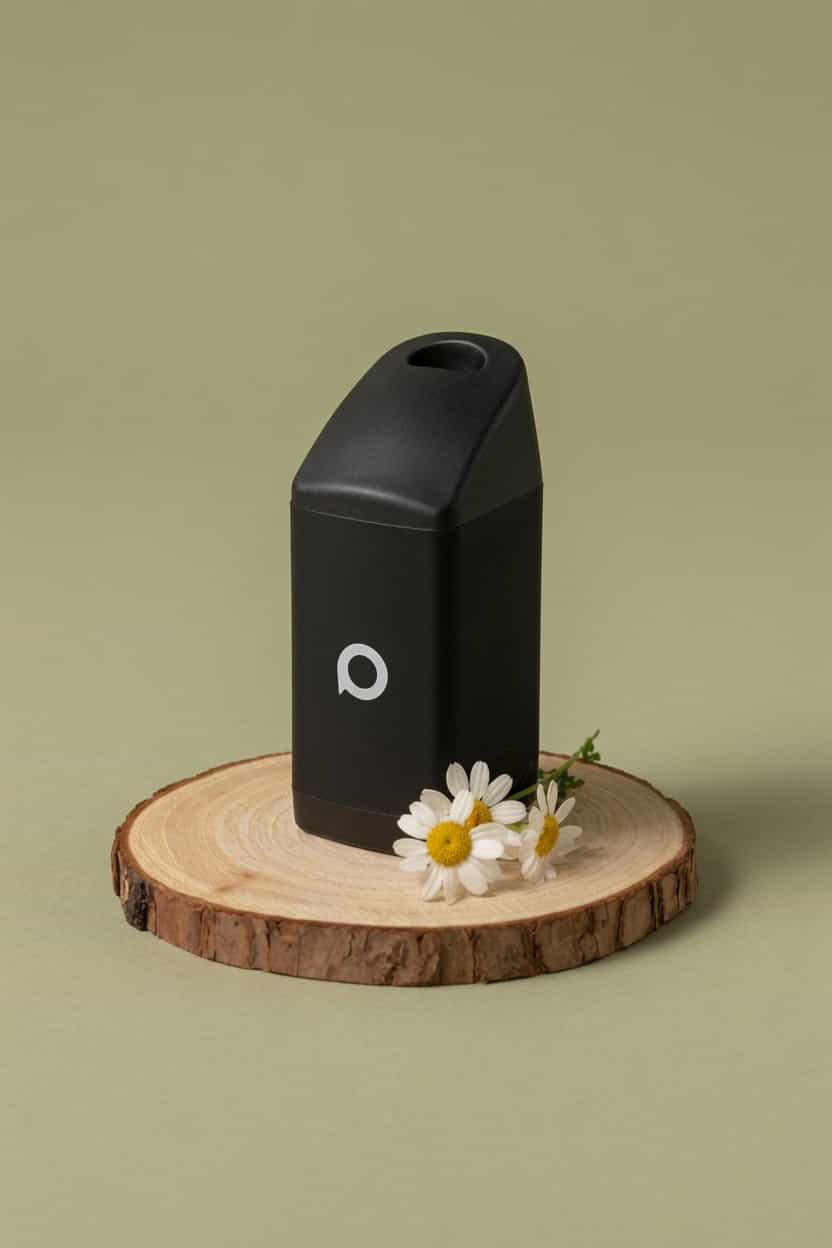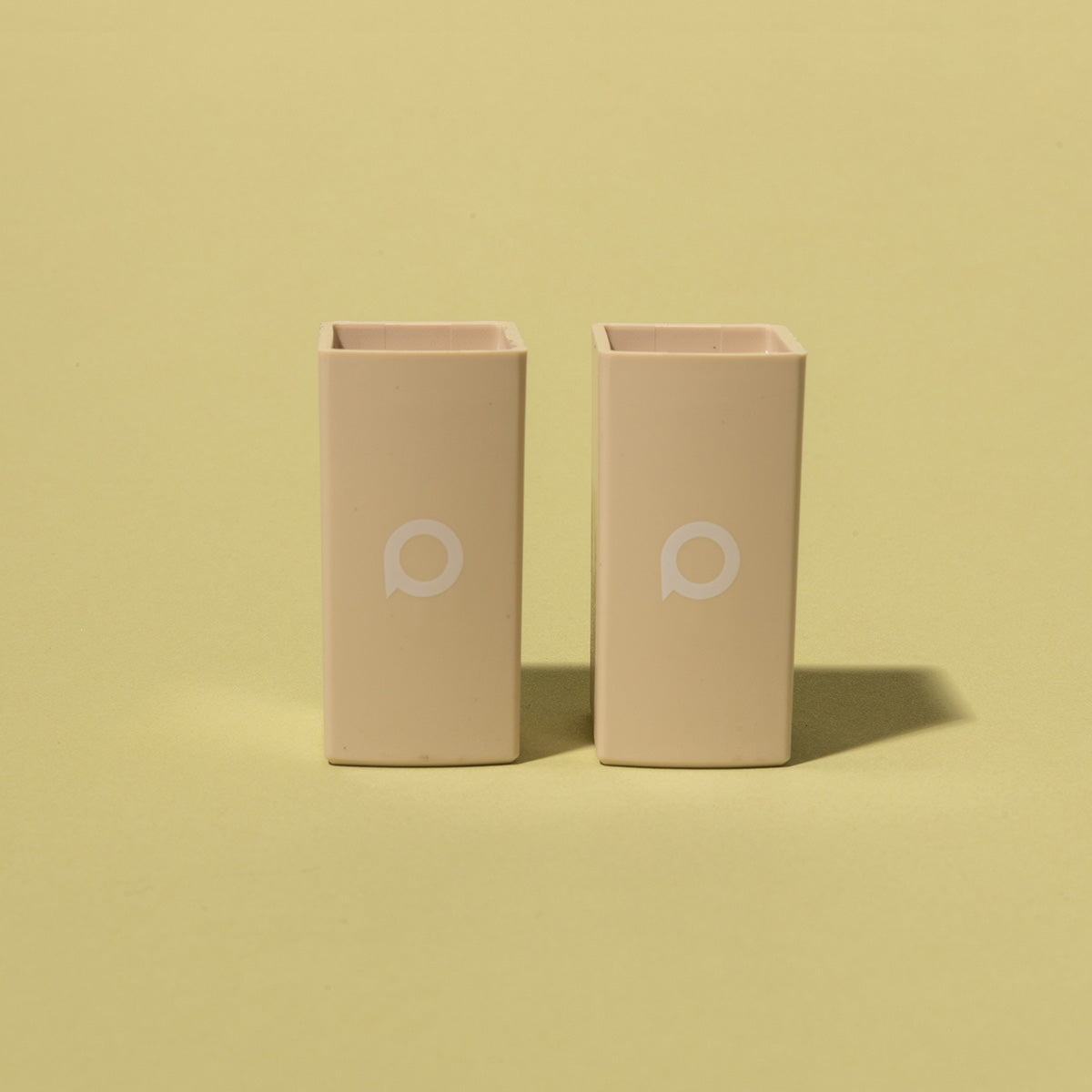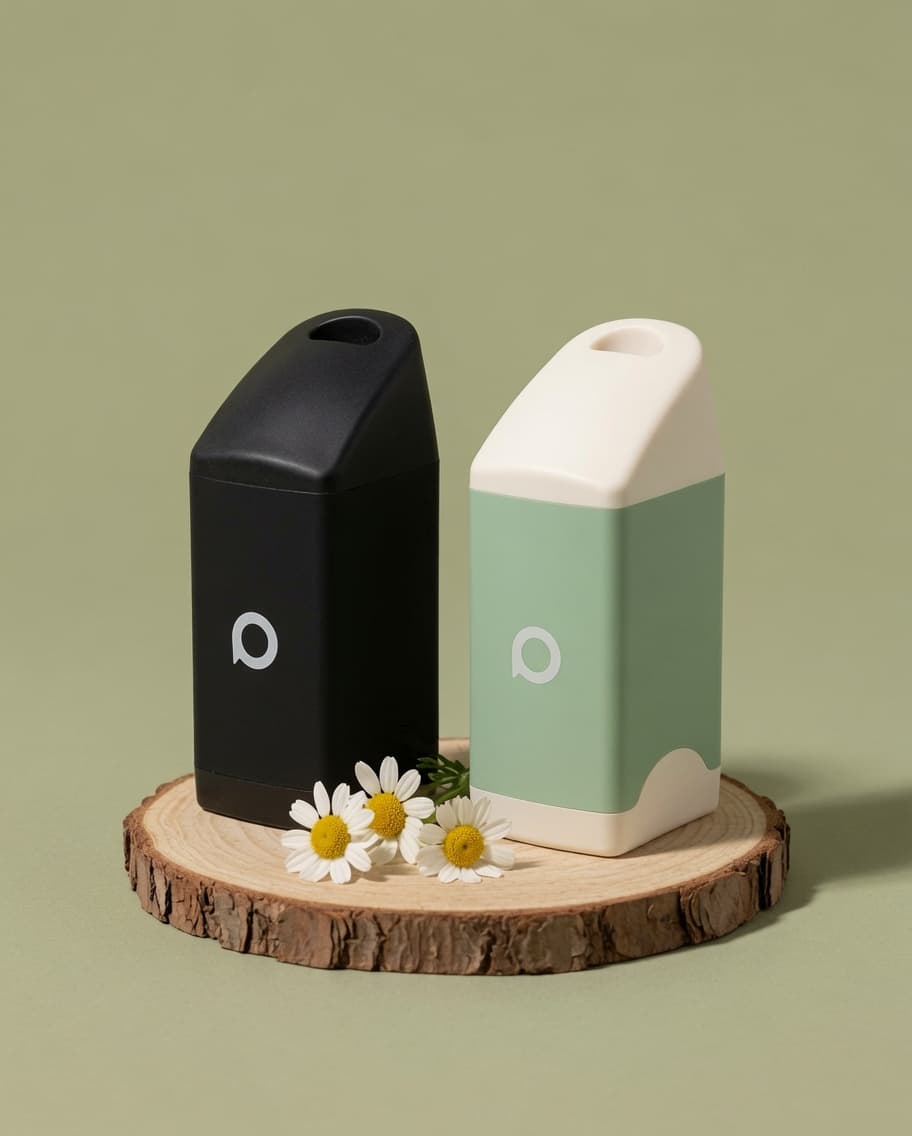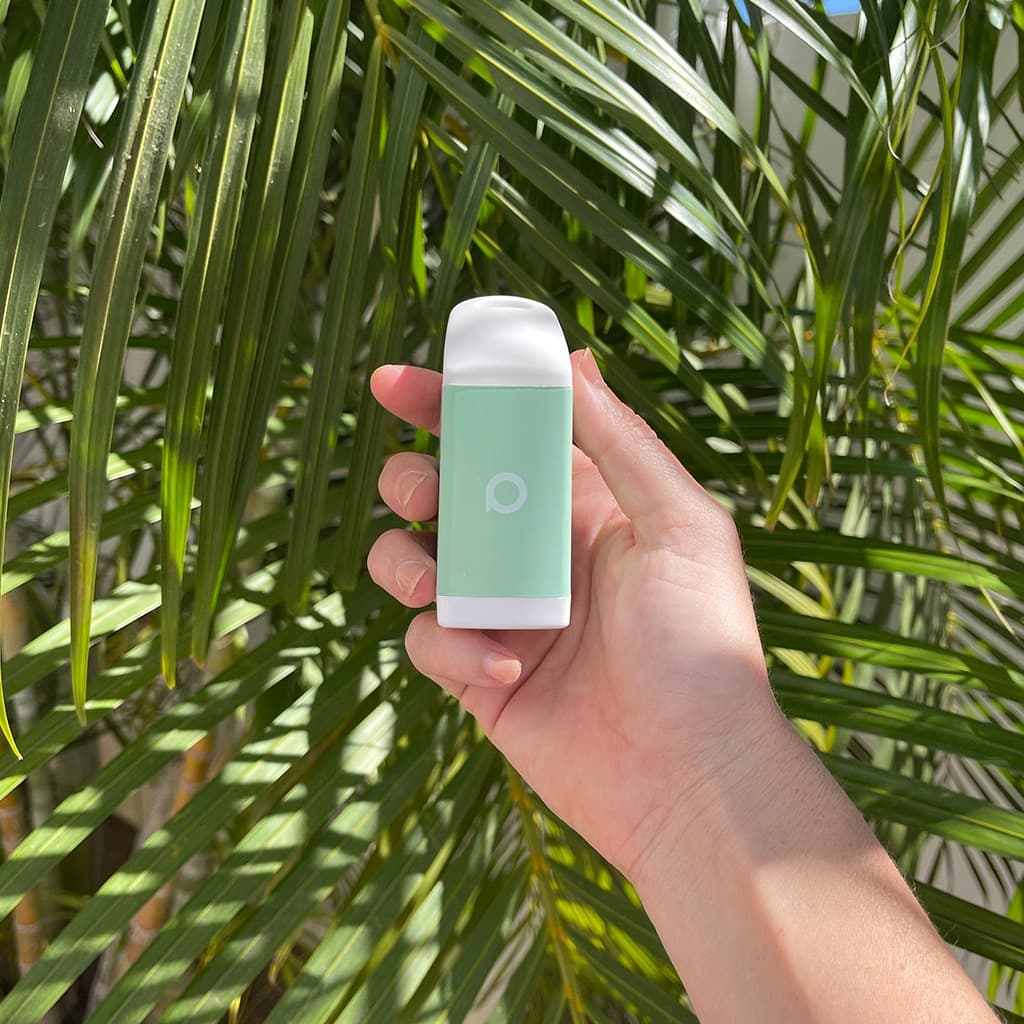
A sploof is a handheld filter that a person exhales smoke or aerosol through. The filter helps reduce visible output and odor before the exhale enters the surrounding room. Commercial sploofs are also called personal smoke filters, personal air filters, or exhale filters. Looking to buy one? See how PHREND compares with DIY and basic sploofs.
How does a sploof work?
A sploof places filter media between your exhale and the room. Depending on the design, those layers may include particulate media, activated carbon, or other odor-control materials.
Particulate media is designed to capture small material carried in the airflow. Activated carbon is commonly used to adsorb some odor-producing compounds. Product construction, seal quality, airflow, moisture, and filter saturation all affect performance.
The device does not filter anything until you exhale through it. Smoke escaping from a lit product, vapor released elsewhere, and odor already in a room remain outside its control.
How do you use a sploof?
- Assemble the device according to its instructions.
- Make sure the mouthpiece and filter are dry.
- Place the mouthpiece against your lips.
- Exhale steadily through the device until the exhale is complete.
- Let the filter dry in a ventilated place before storing it.
- Replace the cartridge when airflow tightens, odor returns, or the stated service life is reached.
Do not inhale through an exhale filter. It is not a vape, smoking device, respirator, or medical device.
Do sploofs work?
A well-designed sploof can reduce the smoke, aerosol, and odor carried in an exhale. Results vary by filter design, the substance being used, how completely the person exhales through the device, and how saturated the filter has become.
No sploof makes indoor smoking safe. The EPA states that ventilation, filtration, and air cleaning can reduce substances released by indoor cannabis smoking, but are not likely to eliminate them. Smoke-free spaces remain the most reliable way to prevent secondhand exposure.
Homemade sploof versus a commercial smoke filter
The familiar homemade version uses a cardboard tube and scented dryer sheets. That may mask odor for a short time, but it is not designed as a measured particulate and odor filtration system. Fragrance is not the same as filtration.
A commercial personal smoke filter should offer:
- Purpose-built filter media
- A mouthpiece that supports a reliable seal
- Defined replacement guidance
- Known materials and product specifications
- Repeatable airflow
- Replacement cartridges or a clear disposal plan
What should you look for when buying one?
Choose based on actual use, not the loudest promise.
Replaceable versus disposable
A replaceable-cartridge design keeps the outer shell in use. Compare the device price, refill price, cartridge availability, and expected replacement frequency.
Size and airflow
Large filters may offer more media. Smaller filters are easier to carry. The right balance depends on whether you use the filter mainly at home, in shared spaces, or while traveling.
Evidence
Specific claims are more useful than absolute language. Look for a stated particle size, test setup, and clearly identified model. Treat phrases such as zero risk, harmless air, or complete elimination with caution.
How long does a sploof last?
A homemade tube is usually done within a handful of sessions: the fragrance fades, the media compresses, and moisture breaks it down. Commercial cartridges publish a service life instead. A PHREND cartridge is rated for up to 500 exhales under normal conditions, and airflow tightening or returning odor tells you it is time to replace the cartridge regardless of count.
Does a sploof work for vaping?
Yes. Exhale filters treat what you exhale through them, and that includes vapor. Vapor carries less particulate than smoke but still carries odor compounds, so the same rules apply: complete the exhale through the device, keep the filter dry, and replace it on schedule. For vape-specific detail, read what vape filters capture and what they miss.
Sploof vs room air purifier
They solve different halves of the problem. A room purifier cycles the air already in the room, which helps after odor is loose. A sploof treats one exhale before it joins the room at all, which is why it works in spaces too small or too shared for a purifier to keep up with. In a smoke-tolerant home, the strongest setup is both: filter the exhale, let the room unit handle the rest.
Is PHILTER a sploof?
PHILTER products perform the same basic job as a commercial sploof: you exhale through them to reduce visible output and odor. PHREND, a reusable personal smoke filter, uses a reusable outer device and replacement cartridges. POCKET is designed around a smaller carry format. See how they compare with homemade and basic sploofs on our sploof page.
Whatever product you choose, use it as one layer of consideration. Follow the law, follow property rules, and do not treat filtration as a substitute for a smoke-free environment.
Curious what happens inside the device? Read how personal smoke filters work and how long a personal smoke filter lasts before it needs a fresh cartridge.