To get cigarette smell out of clothes, air the garment out, then wash washable items with a booster like baking soda or white vinegar added to your normal detergent, and hang them to dry. For pieces you cannot wash, use steam, a fabric-safe odor absorber, and time. Fragrance sprays only cover the smell.
Why smoke clings to fabric
Cigarette smoke is not one smell. It is a mix of tiny particles and oily, tar-like compounds that drift onto whatever is nearby and settle into it. Fabric is the worst offender because it is porous. Every fiber gives the residue somewhere to lodge, and knits, fleece, wool, and anything with a nap hold more of it than smooth, tightly woven cloth.
That residue keeps releasing odor for as long as it stays in the fibers. This is why a jacket can still smell days after the room aired out, and why spraying it just adds a second scent on top of the first. Removing the smell means removing the residue, not layering over it.
Wash what you can
For anything washable, washing is the most reliable fix. Check the care label first, then work with what the fabric allows.
- Shake the garment out and hang it in fresh air for a few hours before washing. Airflow clears the loose, surface-level odor so the wash can focus on what is bound in.
- Add an odor booster to the load. Half a cup to a full cup of baking soda in the drum, or a cup of white vinegar in the rinse, helps break down and lift smoke residue. Use one or the other, not both in the same step, and never mix vinegar with bleach.
- Run your normal detergent on the warmest cycle the label allows. Warmer water releases more residue, but do not exceed what the fabric can take.
- Before drying, smell the wet garment. If odor is still there, wash it again. Heat from a dryer can set a smell that survives one wash, so confirm it is gone first.
- Hang the item to dry in fresh air, outdoors if you can. Sun and airflow finish the job that the machine started.
Heavy or repeated smoke exposure can need two or three cycles. That is normal for residue that built up over time rather than a single session.
No-wash methods for delicate or bulky items
Suits, coats, wool, leather, and anything dry-clean-only will not survive a wash. These take patience instead.
- Air it out. Hang the item outside or near an open window for a day or two. This alone removes a large share of surface odor and costs nothing.
- Steam it. A handheld steamer or a steamy bathroom relaxes the fibers and helps release trapped residue. Let the garment dry fully in fresh air afterward so you do not trade smoke smell for a musty one.
- Use a dry odor absorber. Seal the garment in a garment bag or bin with an open box of baking soda or a bowl of activated charcoal, not touching the fabric, for a day or two. The absorber pulls odor out of the air around the item.
- For structured or valuable pieces, a professional cleaner is the safe route. Tell them it is smoke odor so they treat it correctly.
No-wash methods reduce odor rather than erase it in one pass. Repeat as needed, and give each step time to work.
Getting smoke smell out of hair
Hair holds smoke the same way fabric does, and it sits right under your nose all day. The fix is faster because you can rinse it.
- Wash your hair with your normal shampoo. A second lather usually clears what one misses.
- Between washes, a dry shampoo or a light brush-through with a dab of leave-in product cuts the smell without stripping your hair.
- Airflow helps here too. Loose hair in fresh air sheds odor faster than hair tied up under a hood or hat.
If you smoke often, the smell returns because new residue keeps landing. That points back at the source, which is the real fix.
What only masks the smell
Fabric sprays, perfume, cologne, scented beads, and dryer sheets do not remove smoke residue. They add fragrance over it, and the combination often reads worse than the smoke alone: it signals that someone smoked and tried to hide it. Use a mild scent only after the residue is actually gone, never as the removal step.
The same logic applies to the room your clothes live in. If the space smells of smoke, clean clothes will pick it back up. Clearing the air where you keep your wardrobe matters as much as the laundry: see how to remove cigarette smell from a room.
How long does it take
Set expectations by how much residue there is. A single evening of exposure with a quick air-out and one wash usually clears the same day. Clothes worn regularly around indoor smoke hold residue in the fibers and can take several wash cycles or a few days of no-wash treatment. If odor survives two full washes on a washable item, the residue is stubborn and a longer soak or a professional cleaner is the next step.
Stop your clothes absorbing it in the first place
The cleanest laundry is the load that never picked up smoke. Most of the residue on your clothes comes from the air around you while you use a product, and a large part of that air is your own exhale.
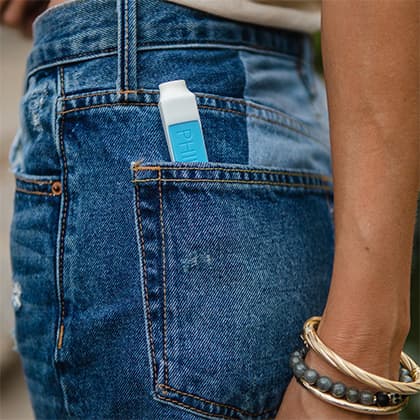
An exhale-through personal smoke filter captures part of the particles and odor in the breath you direct through it, so less of that residue lands on your clothes, hair, and furniture to begin with. PHREND is the reusable everyday filter: you use your preferred legal product, then exhale steadily through the device.
Be clear on what it does and does not do. An exhale-through filter only treats what you exhale through it. It does not capture sidestream smoke from a lit product drifting onto your sleeve, and it does not make smoking or vaping safe. It is an odor-control tool, not a health device.
Pair it with the habits that keep smoke off you: use fresh airflow, keep the source away from where you store clothes, and hang worn items to air out instead of straight back in the closet. If the smell is cannabis rather than tobacco, the same approach applies with a few extra notes in how to not smell like weed.
Clean first, prevent second, and skip the fragrance shortcut. Remove the residue and the smell has nowhere left to hide.