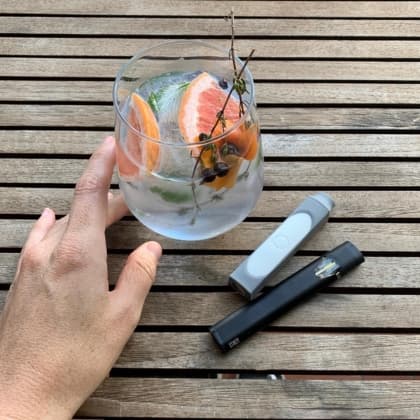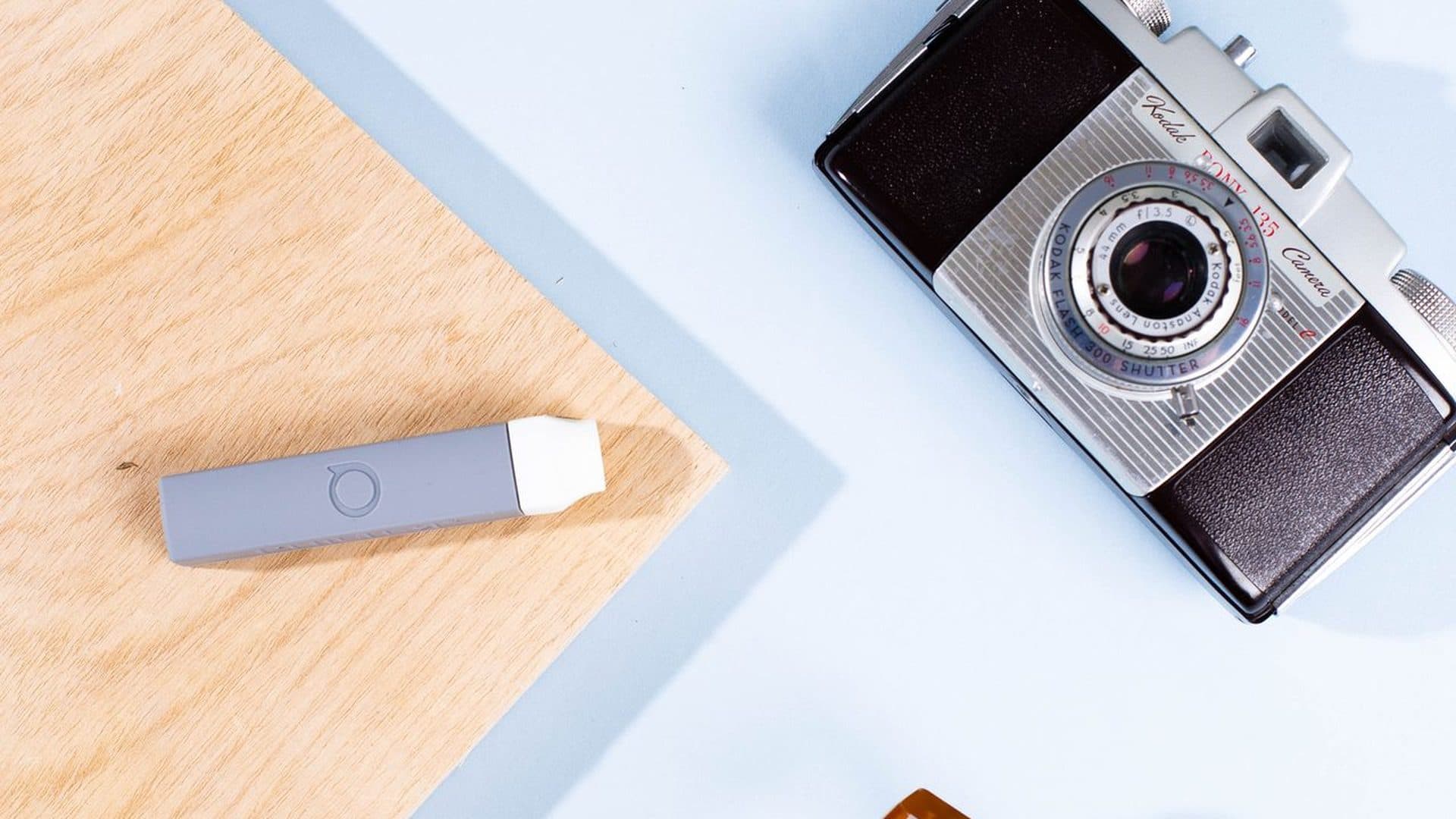
A portable air purifier and a personal filter solve two different problems. A portable air purifier pulls in and cleans the air already in a room. A personal exhale filter treats a single exhale at the source, before it spreads. One works on the space around you. The other works on what you breathe out.
Two devices, two jobs
The confusion is understandable. Both get called air filters, and both promise cleaner air. But they operate at opposite ends of the same problem.
A portable air purifier is a room device. It has a fan that draws surrounding air through a filter, usually a HEPA filter for particles and sometimes activated carbon for odor, then returns the treated air to the room. It runs continuously and works on air that is already floating around: dust, pollen, cooking smells, and lingering smoke that has already dispersed.
A personal smoke filter is a source device. You exhale through it after using a smoking or vaping product, and the filter captures part of the visible output and odor carried in that exhale before it enters the room at all. There is no fan and no power. It only acts on the air you direct through it.
Neither replaces the other. If you already have smoke hanging in the air, a room purifier is the tool that addresses it. If you want to keep your own exhale from adding to that air in the first place, a personal filter is the tool for the source.
What a portable air purifier can and cannot do
A good portable air purifier is genuinely useful for general air quality. Within its rated room size, it can reduce airborne particles over time, which is why people use them for allergens, dust, and everyday odors.
Its limits matter too:
- It treats air only after material has already entered the room and mixed in.
- Its effectiveness depends on room size, fan speed, filter condition, and how sealed the space is.
- Carbon filters for odor saturate and need replacement, often sooner than the particle filter.
- It does nothing for odor already bound into clothing, upholstery, carpet, or a vehicle.
- A single unit cannot keep pace with a continuous, concentrated source right next to it.
For a room you spend time in, a HEPA unit sized to the space is a reasonable buy. If the smell has already settled into a shared space, start with how to get smoke smell out of a house and treat the purifier as the ongoing air-quality layer.
What a personal filter can and cannot do
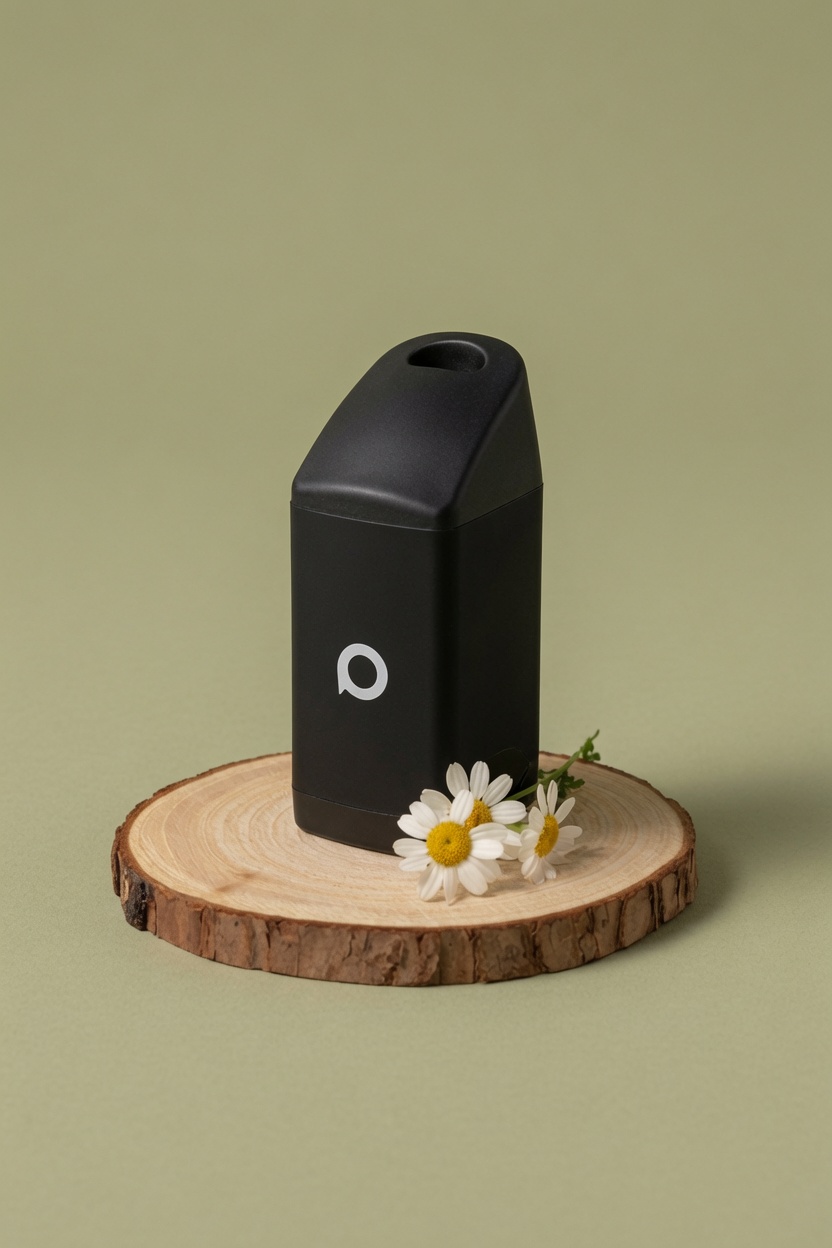
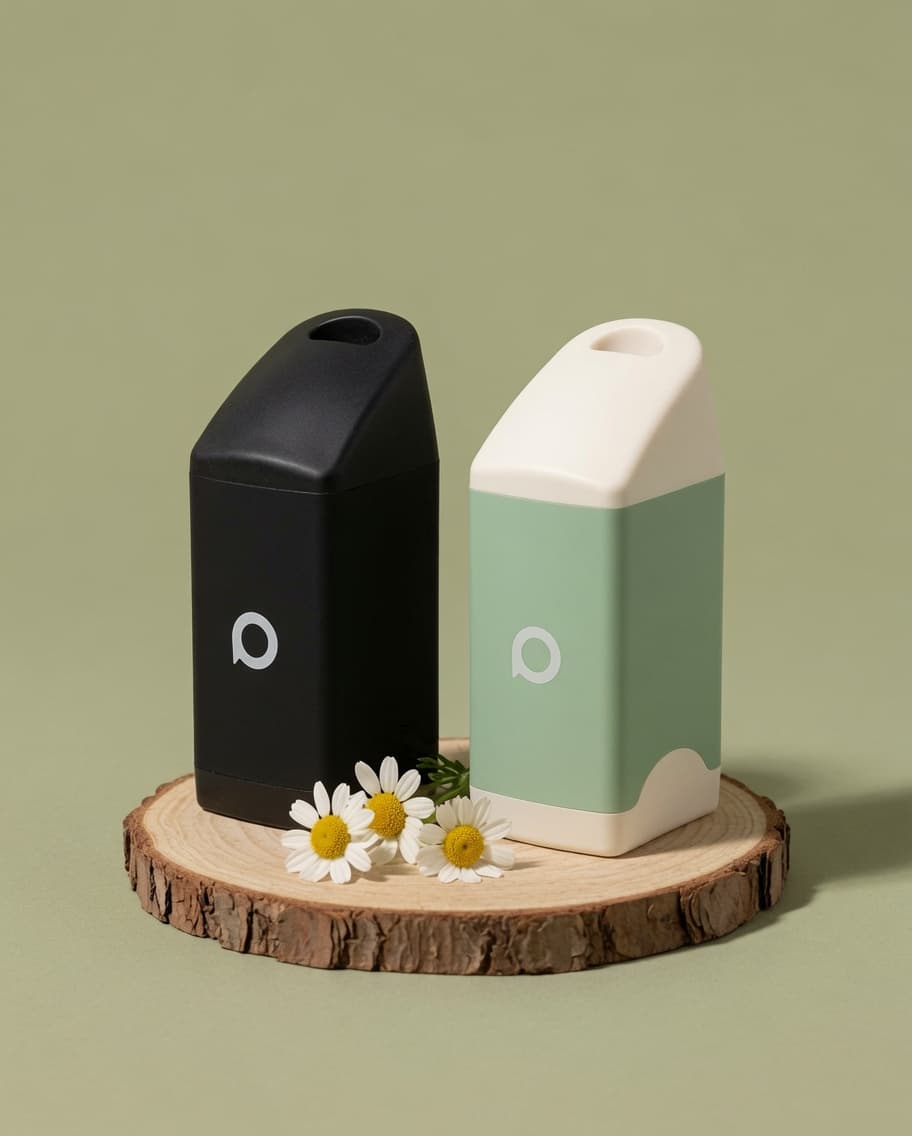
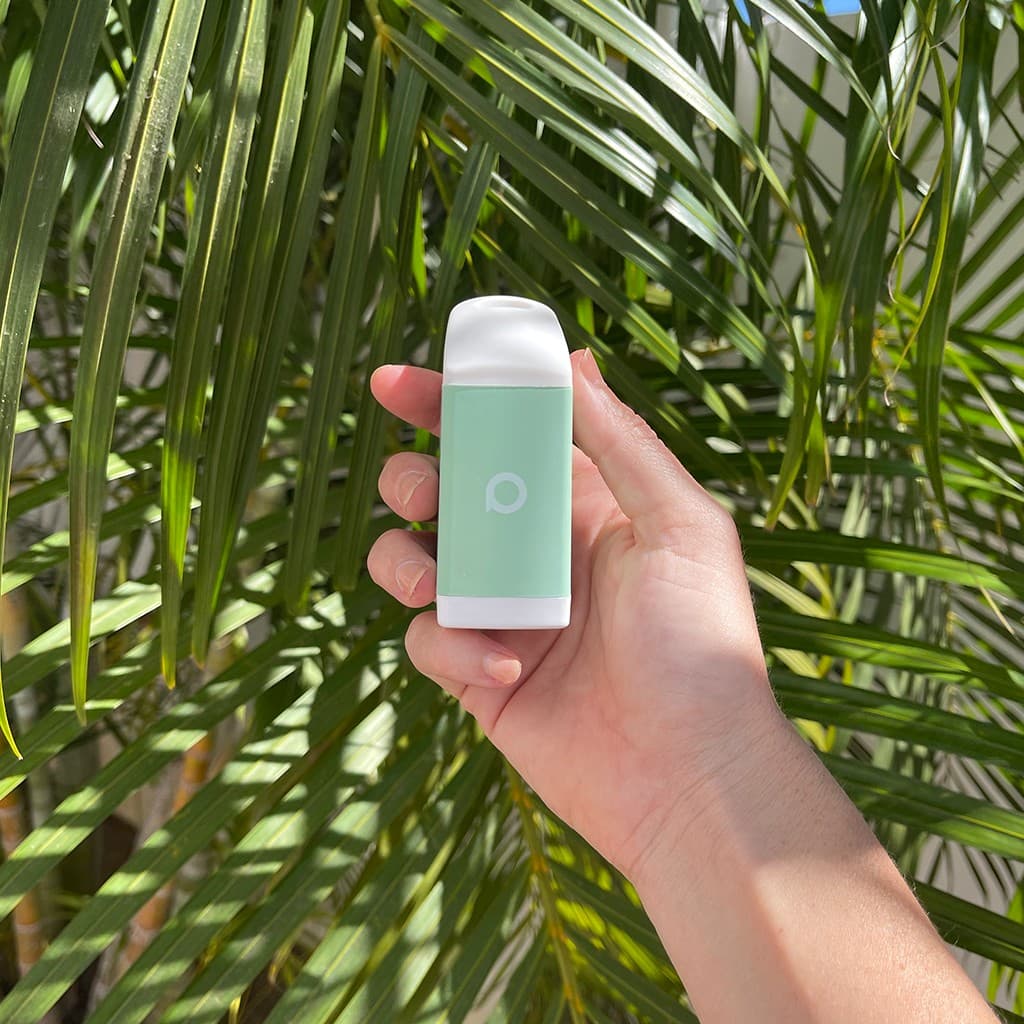
A personal exhale filter is small, passive, and built for one moment: the exhale. You inhale from your device as usual, then breathe out through the filter media. The media captures material carried in that exhale and reduces visible output and odor at the source.
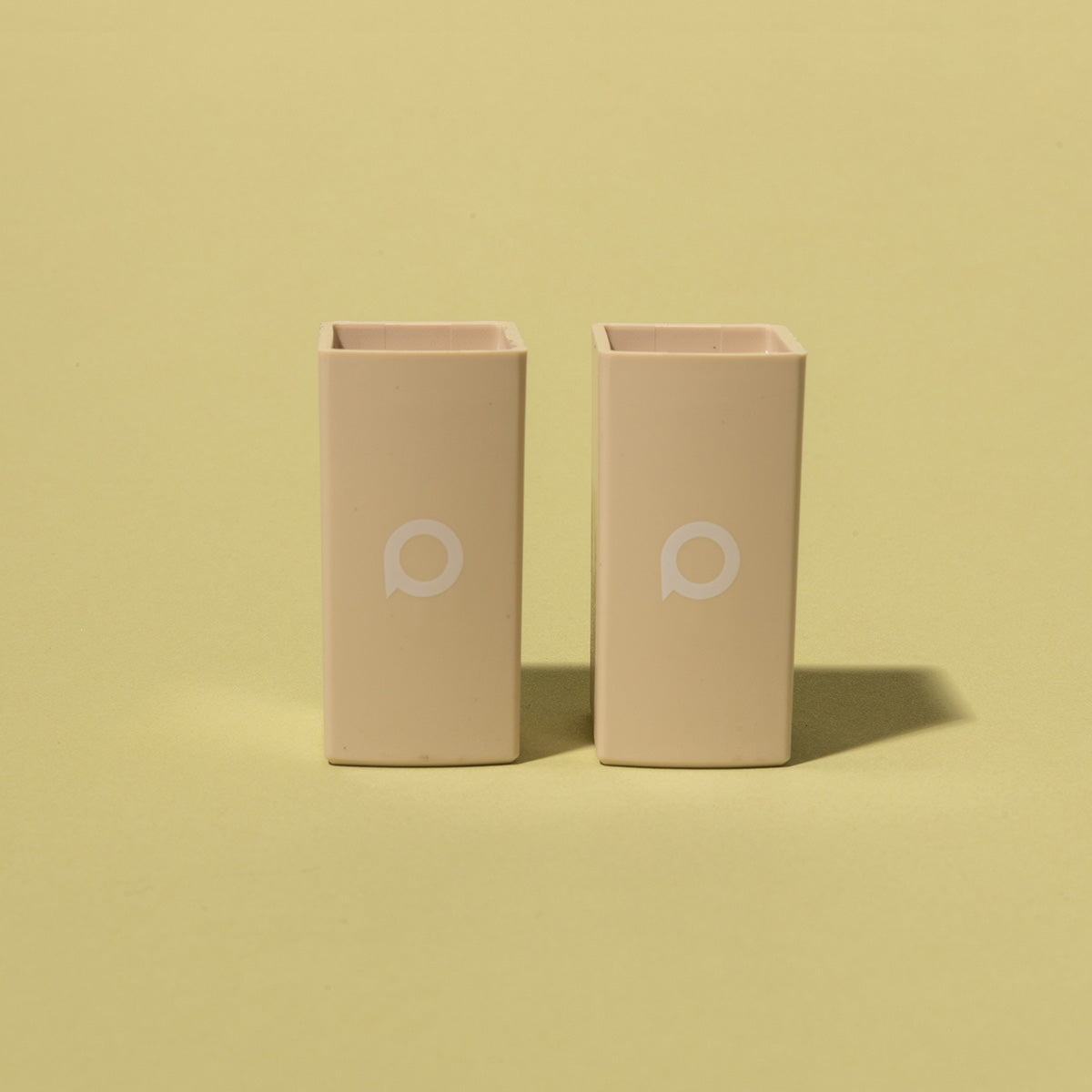
PHREND, our reusable personal smoke filter, removes 99.75% of harmful particulates in secondhand smoke and runs up to 500 exhales per cartridge before the cartridge needs replacing. The cartridge is a biodegradable, plant-based polymer that decomposes in a landfill. There is no battery, heat, or liquid involved.
Here is the honest boundary, and it is the same limit that applies to any exhale-through filter. A personal filter only treats what you exhale through it. It does not capture sidestream smoke that rises directly from a lit product between puffs, and it does not make smoking or vaping safe. It is an odor-control and discretion tool, not a health device and not a substitute for following smoke-free rules.
An honest comparison
| Question | Portable air purifier | Personal exhale filter |
|---|---|---|
| What it treats | Air already in the room | One exhale at the source |
| Power | Needs a fan and electricity | Passive, no power |
| Portability | Carried between rooms, not pocketed | Pocket-sized, goes anywhere |
| Handles sidestream smoke | Partially, once it disperses into the room | No, only the directed exhale |
| Ongoing cost | Replacement HEPA and carbon filters | Replacement cartridges |
| Best at | General room air quality | Keeping your exhale out of the room |
Read the table by asking which column matches your problem. If the issue is the air in a space you occupy, the left column is your tool. If the issue is your own contribution to that air, the right column is.
Which problem do you actually have?
Pick based on the situation in front of you.
You want cleaner room air in general. Allergens, dust, cooking odor, or smoke that already settled into a space. A portable air purifier sized to the room is the right category. A personal filter does nothing for air that is already dispersed.
You want to keep your own exhale from spreading. You are the source, and you want visible output and odor controlled before they reach the rest of the room. A personal exhale filter is built for exactly that, and it goes with you when a plug-in unit cannot.
You want both, and that is common. Many people run a room purifier for baseline air quality and use a personal filter at the source when they smoke or vape, so the purifier has less to clean up afterward. The two are complementary, not competing.
If you want the mechanics of source-level filtration, how personal smoke filters work covers the category in plain language.
The bottom line
A portable air purifier and a personal filter are not rivals. They sit at different points in the same problem: one cleans the room, the other treats the exhale before it becomes the room's problem. Match the device to the job, and know the limits of each before you buy.
If you want to understand how source-level filtration works under the hood, our explainer on the Zero-5 filtration technology covers the five-stage process in plain language. And when you are ready to compare formats, you can see the full lineup in our store.